Nearly half of all first-time candidates walk out of an RSA driving test with bad news. That number surprises people every single time I mention it. Most learners assume failing means they are just not car people but honestly, it usually comes down to a handful of avoidable habits that show up again and again on test day. Driving test preparation is not about being a naturally gifted driver. It’s about knowing exactly what the tester is watching for and fixing the small stuff before it becomes a big problem.
This blog walks through the seven most common reasons learners fail, based on patterns we see week after week with real students around Rathnew and Wicklow. By the end you will know exactly what to work on before you book that test slot.
Why Learners Fail the RSA Driving Test
1. Poor Observation at Junctions
This is the number one killer. Testers want to see your head actually turn, not just your eyes flick sideways. A lot of learners check mirrors on autopilot without really absorbing what’s there. Roundabouts and T-junctions are where this trips people up most, because a lot is happening at once and nerves make everyone rush.
2. Weak Clutch Control
Stalling once probably will not fail you. Stalling three times in traffic, on a hill, or pulling out of a junction definitely will. Clutch control feels awkward for months and then suddenly clicks, but if a student rushes their Essential Driver Training without enough hill starts, this gap shows up right when it matters most.
3. Not Understanding the Test Routes
Every test center has patterns. Certain junctions, certain hazards, certain tricky bits locals know about. Learners who only ever practice on quiet estate roads get a shock when the real test throws them onto a busier stretch they’ve never driven. This is honestly one of the easiest things to fix, and it’s exactly why pre-test driving lessons exist.
4. Speed That’s Too Cautious or Too Fast
People assume driving slowly is always safer. It isn’t. Crawling along under the limit without good reason reads as a lack of confidence and can be marked just as harshly as speeding. The tester wants smooth, decisive, appropriate speed for the road, not hesitation at every bend.
5. Poor Parking and Reversing Skills
Reverse parking, turnabouts, and hill starts get practiced the least because they feel boring compared to actual driving. That’s a mistake. These maneuvers are worth serious marks, and they’re entirely predictable, which means there’s zero excuse for going in underprepared.
6. Test Day Nerves Taking Over
Nerves genuinely change how people drive. Hands grip tighter, mirror checks get rushed, reactions slow down. A student who drives beautifully in lessons can fall apart the second the tester gets in the car. This one isn’t really about skill at all. It’s about exposure and repetition until the nerves lose their grip.
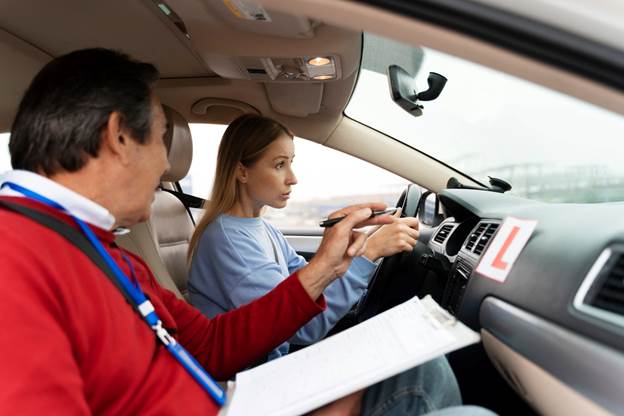
7. Learning in an Unfamiliar Car
Turning up to the test in a car that’s not the one used for lessons is a bigger deal than people think. Different clutch bite points, different mirror angles, different blind spots. Even small differences throw off timing and confidence right when a learner needs it least.
How Pre-Test Lessons Actually Fix This
A good pre-test lesson isn’t just another driving hour tacked onto the end of a course. It’s targeted. A qualified instructor watches for the exact faults above and corrects them before test day, not during it.
Here’s what a proper pre-test session usually covers:
- A run through actual test routes, including known tricky junctions and roundabouts
- Focused practice on reversing, hill starts, and parking under time pressure
- Honest feedback on speed control and observation habits
- A mock test format so nerves get some exposure before the real thing
- Confirmation the car being used matches test-day conditions
Students who book at least one or two pre-test lessons close to their test date consistently perform better than those who go in cold off the back of their EDT alone. It’s not magic. It’s just familiarity, and familiarity is what beats nerves.
Why the Instructor Matters More Than People Realize
Not every driving lesson is created equal. An RSA Approved Driving Instructor has been assessed against national standards and knows exactly what examiners are trained to look for, because the same governing body sets both. That’s a very different experience compared to learning from a friend or family member, however well-meaning they are.
- A qualified ADI spots patterns a learner cannot see in themselves.
- Catches habits like checking the mirror a beat too late.
- Notices a tendency to creep the clutch at junctions.
- These small corrections rarely get noticed without a trained eye watching closely, lesson after lesson.
Local knowledge counts too. An instructor who’s driven the Wicklow test routes hundreds of times knows where nerves tend to spike and where students usually lose marks. That kind of insight genuinely shortens the learning curve.
A Quick Reality Check Before Test Day
Most failed tests aren’t failed because of one huge mistake. It’s usually three or four minor faults stacking up across the drive. Grouping mistakes matters here, because examiners are trained to spot patterns, not just isolated slip-ups.
Before booking a test, it’s worth asking honestly whether hill starts feel automatic yet, whether roundabouts still cause hesitation, and whether the car being driven feels completely familiar. If any of those answers is no, a pre-test lesson or two is time well spent.

Conclusion
Failing a driving test almost never comes down to bad luck. It’s usually a small, fixable pattern like rushed observation, shaky clutch control, or unfamiliarity with the actual test route. The good news is every single one of these is preparable with the right guidance and enough focused practice before test day.
If you’re gearing up for your own test around Rathnew or Wicklow, a bit of targeted pre-test coaching from a patient, experienced instructor can make all the difference. That’s exactly the kind of calm, focused preparation Rathnew Driving School has built its reputation on.
FAQs
How many pre-test lessons should I take before my driving test?
Most learners benefit from one to two focused pre-test lessons in the week before their test, ideally in the same car and along similar routes to the actual test centre.
What’s the most common reason people fail the RSA driving test?
Poor observation at junctions is consistently the top reason, closely followed by stalling and weak clutch control under pressure.
Does learning with an RSA approved driving instructor actually make a difference?
Yes. An approved instructor is trained against the same national standards examiners use, so their feedback tends to target exactly what gets marked on test day.
Can nerves alone cause someone to fail their driving test?
Nerves rarely cause a fail on their own, but they amplify small mistakes like late mirror checks or rushed manoeuvres, which is why practice under test-like conditions matters so much.